Saturday, February 10, 2018

Useful notes

Frying fish (sauteeing with little oil)

 Fish tends to stick to the pot  (steel/cast iron, not nonstick) and break into pieces when you try to turn it. The trick is to

  1. heat the pan/wok on high
  2. Reduce heat to medium and add oil
  3. Wait for a few seconds to let the oil become hot. The visual indication is that when you pour the oil, initially it will stay high on the pan surface due to surface tension and stay in a limited area due to higher viscosity. As it gets hot, it will flatten out more and spread out. White vapours will start coming out when it starts to get too hot. Don't wait any longer than that, as it may catch fire.
  4. Reduce heat to medium low/low and lay down the fish pieces. Spread them out because they tend to stick to each other if in contact.
 (Courtesy: my mother)


 It helps to use a round bottom kadai (wok) for bengali style frying, where the fish is usually cut into small pieces 5cm x 7.5 cm or smaller). The oil stays deep in the center, where the currently cooking piece will be, and as it gets almost done you move it up along the sides where the heat is lower and the oil can drip out back tonthe center. In case of large pieces, like a whole pomphret, a flat bottom pan is better suited.


Ginger paste when sauteeing spices ( when cooking jhol/gravy items)

Ginger paste, when added to hot oil, tends to splatter dengerously. It can be reduced by first adding turmeric powder to the oil and then adding ginger paste. Don't leave the former for too long, as it will quickly burn black. After ginger put chopped onions on top and that will contain the splatter. (Courtesy: my mother)

Eggs

I have been struggling to make good fried eggs, and found out that the same technique as frying fish works for this. Add oil to hot steel pan and bring to medium heat. Break the egg on top (I bring them to room temperature first, as cold egg makes the pan cool down). Reduce to low / medium low. If you prefer a solidified layer over the yoke, either cover with a lid or turn it over (metal spatula works better than wooden or nonstick).

For poaching, adding a little acid (vinegar/ lemon juice) to the water really helps in coagulation. (Courtesy Quora)

Sunday, February 22, 2015

leek stew

This is another impromptu dish with ingredients i already had and needed to finish.

Ingredients (3 servings)

Leek - 1
Carrot - 2 medium
Sweet potato - 1 medium
Aragula leaves - 2 cups (optional, i added them to use up my 1 week old stock).
Garlic (smashed) - 1/2 tsp
Pepper powder - 1/2 tsp
Freshly ground black pepper - 1/2 tsp
Chicken thighs - 3 (optional, if you are veg then adding shredded cheese at the end may work)

Procedure
Chop the sweet potatoes and carrots into thin slices. Chop the leek into thin rings. Keep the white and the greens separate.
Bring to boil in 4 cups of water and then simmer at low heat for 5 minutes with lid on.
Chop the chicken into small pieces and add (i put the bones as well).
Add salt according to taste and pepper powder.
Keep simmering for 10 minutes with lid on. The idea is that chicken gets cooked faster than sweet potatoes. Adjust your timing as suitable.
In a frying pan heat 1 tbsp oil and add the garlic. When brown, add the white of the leek and stir fry for 2-3 minutes. Add this and arugula leaves to the  simmering vegetables.
Keep simmering for another 5 minutes and then turn off heat. Let sit for 5 minutes.
Heat 2 tbsp of oil and stir fry the leek greens.
Add the fried greens and freshly ground pepper before serving.


Saturday, January 24, 2015

Green lentils with mixed vegetables

This was an improvisation to use up the vegetables in my fridge. Turned out to be quite nice (I ate it at three consecutive meals and still not sick of it).

Ingredients:

Green lentils - 1/2 cup
Kale greens (or any leafy vegetable with slightly tough leaves, Kale is similar to mustard greens and belongs to the same genus Brassica. I feel the texture of Amaranth or "note` shak" is also suitable)
 - 200 g (chopped)
Tomato (medium) - 2 (chopped)
Carrots (chopped) - 2 cup
Onion (chopped) - 1/2 cup
Garlic - 1 - 2 cloves (finely chopped)
Green chili - 1 (chopped)
Cumin seeds - 1/2 tsp
Coriander powder - 1/2 tsp
Salt - according to taste

Procedure:

  1. Boil the lentils in 2 cups of water for 10-15 minutes (should be half cooked, not completely soft).
  2. Heat oil in a pan and first add the cumin seeds and let it pop for ~20-30 seconds.
  3. Add the garlic, onion and green chili and fry until the onion starts to get brown.
  4. Add the carrot and stir fry for 2-3 minutes.
  5. Add the kale and stir fry for another 2-3 minutes.
  6. Add tomatoes and cook until they start to melt.
  7. Add the boiled lentil (with water) and mix salt and coriander powder, cook for 5 minutes.
  8. Let it stand for 5 minutes and serve with rice.

Tuesday, May 27, 2014

Steamed pangas (with spices)

UPDATE: This had turned out to be a catastrophe. The fish has a strong smell which I found rather revolting. Also, it was too oily for my taste.

UPDATE 2 : A Bangladeshi friend told me that oneshould make spicy curry out of Pangas, not steam it. The key to avoid the smell is : (1) add a lot of garlic and onion (2) add one whole leaf of lemon tree. And apparently it is one of the most delicious fish.

 ---

Pangas is a fish I have never had before. It looks like boal which is a popular and cheap carnivorous catfish in Bengal (and south east Asia). After searching the internet to confirm I realized that this is something different and controversial. There are several fish under the same name. Apparently the one common in Bengal is yellow-tail catfish. However the kind I got from the local fishmonger looks more like the Vietnamese basa fish. The tail is not yellow but silver grey. And it is one of the cheapest fish in the shop. There seem to be serious concerns about this fish but this turns out to be propaganda.
After a bit of reading up I was in a dilemma about how to cook it. Boal is commonly cooked with mustard paste (Jhal). This is possibly because the fish itself is very bland and fatty. On the other hand, less fatty catfish like magur and shingi are considered very nutritious and easy to digest to be popular as diet for the sick, old, and children. Hence they are cooked with very little spice, usually just a dash of turmeric and cumin paste and a piece of green chilli. Although Pangas is supposed to have small amounts of fat, it felt really oily when I was washing it. But I was too lazy to do the mustard paste thing, it is hard to do with a mortar and a pestle, which is all I have for preparing my spices.
Ingredients:
  • Pangas fish 600 g (I used cross sections of ~1" thickness (commonly known as Bengal-cut in Southern India, where local people usulally slash the fish), but I guess fillet should be fine, you just need to change the timings based on thickness).
  • 2 tbsp oil
  • 1 onion
  • 6 pods of garlic
  • 4 dried chili (if you have green chili, use that in stead)
  • 1/2 tsp cumin powder
  • 1 tsp coriander powder
  • 10 black pepper corns crushed
Procedure:
  • Heat the oil in a pan (220 degree celsius on my induction heater until the you can see vapour coming from the oil)
  • Add dried red chili
  • Add chopped garlic pods
  • Add onion
  • Fry until the onion becomes white
  • Layer the fish on top of the onion.
  • Sprinkle the coriander and cumin powder and the crushed black pepper on top of the fish pieces and cover.
  • Cook for 5 minutes on low heat (90 degrees celsius on my induction heater).
  • Turn the fish pieces over and cook for another 5 minutes with cover on at low heat.
  • The fish should be fully cooked by now and there will be some water released from the flesh. You can dry it up at high heat without cover or finish cooking here.
I am planning to serve this with white rice boiled with a piece of Tejpata and will update once I have the results.

Sunday, September 29, 2013

Shuntki maachher charchari (dry curry of dried fish)

This is stolen from UB who is the best cook of Bengali food I have met so far (other than my Mom, of course). This is going to be vague as I have not tried it yet.

Take dried small fish (or shrimps, anything about 1-2" long)  and soak it in vinegar for some time (1-2 hr) - this helps in removing the stink of dried fish.

Boil some water and put the soaked fish into it (the water should be boiling hot) for a couple of minutes before draining it out.

Heat oil in a wok and fry the fish lightly to make it crispy and keep them aside.

In the same oil fry panch phoron (at least nigella seeds), chopped (long) onions, green chili (sliced lengthwise into to halves), chopped radish, chopped onion stalks etc (any vegetable that can can be crunchy when cooked).

Add a little water and cook till the vegetables are almost done and add the fish.

Cook for a few more minutes.

Wednesday, May 22, 2013

Chicken wings and rice with basil, thyme and honey

Ingredients:
  1. Chicken breast quarters : 2 (~500 g)
  2. Vinegar : 4 tblsp
  3. Pepper corns: 6-10 (finely crushed)
  4. Dry basil: 1 tbsp
  5. Dry thyme: 1 tbsp
  6. Honey: 2 tbsp
  7. Oil/fat: 2 tbsp
  8. Rice: 100 g
Procedure:
  1. Boil a mixture of water and salt in a deep pot. Put the chicken into the boiling water so that it is entirely submerged. Take it off heat and let cool down for 10 minutes.
  2. Drain the water. Marinate the chicken with the vinegar, pepper corns, basil and thyme for 10 minutes or longer.
  3. Heat oil in a pan. Put the chicken (keeping the marinade with the juices aside) into it and cover. Cook for 1-2 minutes at high heat. Flip it and cook for another 1-2 minutes. 
  4. Reduce heat to below boiling point (~90 degrees Celsius), add two cups of water and cook for at low until chicken is done (~20 minutes). Flip the chicken pieces midway.
  5. Remove the chicken pieces and season them with honey and then pour a few tablespoonfuls of the juices over them. Now rinse the marinade with 1/2 cup water and add it to leftover juices in the pot. Add the rice. Add more water if necessary and bring to boil. Cook until rice is done.
  6. Serve the chicken with the rice. 

Sunday, January 13, 2013

Shukto

This is a very common vegetarian dish and you will get many recipes on-line. There can be a wide variety of shukto depending on the household. But fundamentally it is a bitter dish based on mustard paste. You can add almost any green vegetable and potatoes on top of that, and it will still be shukto. Here is one of my versions.

Ingredients:
  1. Bitter gourd: 1
  2. Brinjal: 1/2 (large)
  3. Potato: 1 (medium)
  4. Raw banana: 1
These  are the most common vegetables for shukto. You can use drum-sticks or any other bitter vegetable instead of bitter gourd. You can add almost any green vegetable: ridge gourd, patol (pointed gourd), etc. go well with shukto. On the spice side you need:

  1. Mustard paste: 1 tsp
  2. Turmeric powder: 1/2 tsp
  3. Coriander powder: 1/2 tsp
  4. Cumin powder: 1/2 tsp
  5. Green chili: 2
  6. Ginger paste: 1/2 tsp
  7. Bay leaves: 2
  8. Paanch phoron: 1 tsp
  9. Poppy seed paste: 1 tsp (optional)
  10. Salt: according to taste.

Procedure:
  1. Chop all the vegetables into similar shape and size. I prefer 2" long, 1/2" thick pieces.
  2. Heat oil in a wok.
  3. Add paanch phoron and bay leaves.
  4. As the seeds start popping, add green chili and ginger paste. Keep mixing for a minute.
  5. Add the mustard paste (and poppy seed paste).
  6. Add the vegetables in sequence of their cooking time (bitter gourd, pointed gourd take the longest to cook, potatoes, brinjal and raw banana are intermediate, ridge gourd gets done fastest).  If you want it perfect, a better way is to fry the vegetables separately: heat oil in a wok. First semi-fry the pointed gourd and bitter gourd - they use up most oil; then the potatoes, the brinjal and the raw banana. You don't really need to fry the ridge gourd.
  7. Add enough water so that all the vegetables are submerged. Cover and bring it to simmer.
  8. Add the powdered spices and cook until done.

Spicy beef curry

The gravy was really good, but the meat was too tough. You may want to make sure you have tender meat for this or pressure-cook the meat before-hand. In the latter case, skip step 12 and add the stock along with the meat.

Ingredients:
  1. Beef: 500 g (chopped into 1" cubes)
  2. Garlic: 6 pods
  3. Ginger: 1" stick
  4. Tomato: 6 small
  5. Curd: 200 ml
  6. Turmeric powder: 1 tsp
  7. Coriander powder: 2 tsp
  8. Cumin powder: 1 tsp
  9. Garam masala: 1 tsp 
  10. Cardamom: 4 pods
  11. Cinnamon: 1" stick
  12. Cloves: 6
  13. Bay leaves: 4
  14. Curry leaves: 10-15
  15. Dried red chili: 3
  16. Green chili: 6 (sliced into two)
  17. Onion: 2 medium
  18. Sugar: 1 pinch
  19. Salt: according to taste

Procedure:
  1. Wash the beef and marinate with 1 tsp garam masala, 1/2 tsp red chili powder, 1/2 tsp turmeric powder, salt and 2 tbsp cooking oil.
  2. Grate the ginger into a coarse paste and crush the garlic.
  3. Chop the tomatoes into small pieces (split each one into 8)
  4. Dice the onions.
  5. Crush the cardamoms, cinnamon and cloves into coarse powder.
  6. Heat cooking oil in a wok.
  7. Add sugar, red chili and bay leaves. 
  8. As they start to get brown, add 3 green chili, 3/4 of the curry leaves, ginger and garlic. Keep stirring.
  9. Add the onions. Keep stirring until brown.
  10. Add the tomatoes. Keep stirring until they start to melt.
  11. Add the beef and keep mixing until water starts to come out.
  12. Add 4 cups of water, cover and cook at low heat for 30 minutes.
  13. Add the curd. Add coriander powder, cumin powder, salt and the rest of the turmeric powder. Mix well, cover and cook until meat is cooked.
  14. Add the rest of the spices: the green chilies and the curry leaves (crush them in your palm to get the flavour out) and the clove-cardamom-cinnamon powder.
  15. Let it simmer for 2-3 minutes and it should have thick gravy when done.

Tuesday, December 18, 2012

The minimal Bengali meal: alu-bhate-bhat (boiled rice with mashed potatoes)

This is what one makes when lacking time/energy to cook a proper meal.

Ingredients:
  1. rice: according to your appetite. The amount depends on the kind of rice and how old it is. Remember that freshly husked rice does not increase in volume as much as old rice when boiled. Also, parboiled rice is not as filling as unboiled rice (after cooking).
  2. potatoes: 1-2 medium
  3. salt: according to taste
  4. oil: 1-2 tsp (any of mustard oil/sunflower oil/ghee/butter, I have not tried any other oil - but whatever edible oil/fat you like can be used)
  5. chili - 1-2 green or dried red (optional)
  6. onion - 1 small (optional)
Procedure:
  1. Wash the rice and the potatoes in water.
  2.  Slice the potatoes into 2-4 pieces. This determines how fast they are cooked. If using a pressure cooker, you may not need to slice them at all.
  3. Boil the rice and the potatoes together. Determining the amount of water is tricky. My rough standard is: for pressure cooker, the water level should remain 1" higher than the rice level (without the potatoes). If cooking in a pot, it depends on how much opening there is for vapour to go out and at what temperature you are cooking it. It may be safer to put excess water and drain it out at the end of cooking (but you lose a lot of nutritional elements with that). You may keep some of the excess water and have a semi-liquid version [called "phyan bhaat" (rice with starch)].
  4. Take the potatoes out of the rice. If the potatoes are fresh from the farms, they tend to have thin skin which is edible. Otherwise peel them using your fingers.
  5. Mash the potatoes with salt (1/2 tsp or according to taste), oil, green chili and chopped raw onions. If you are using dried red chili, roast them first and then mash them. You can vary the taste by mixing the oil, chili, onion first and mashing them together before mixing the potatoes. Roll the whole thing into a ball.
  6. For each mouthful, top the rice with a little bit of the mashed potatoes and eat. 
  7. Additional taste enhancers: You may want to sprinkle some extra salt on the rice for better taste. You can bite off bits of raw onion and/or green chili with each mouthful. You can squeeze a teaspoonful of lemon juice on the rice. You can add extra lump of butter or  some ghee to the rice.

Monday, November 26, 2012

Boiled chicken with mashed potatoes

This was another accidental creation. I was in the middle of boiling some potatoes when a power-cut made me abandon them for the time. Later in an attempt to use those half-cooked potatoes I bought some chicken and made up the following:

Ingredients:

Chicken: 1/2 kg (with bones) cut into large (~3"x3"x1") pieces.
Coriander leaves with stem: 50 g
Cumin seeds: 3/4 tsp
Salt: 3/4 tbsp or according to taste
Potatoes: 3 medium sized
Butter/ghee: 2 tbsp


Procedure:

  1. Clean the coriander leaves and separate the leaves from the stem.
  2. Peel and chop the potatoes into thin pieces (the thinner they are, the faster they get cooked)
  3. Add 1 tbsp butter/ghee and 3/4 tbsp salt to the chicken and mix well.
  4. Add 5 cups of water and cook in low heat with lid on for 1/2 an hour (until the chicken is cooked). I used the "soup" mode of my induction cooker. Add the coriander stems and 1/2 tsp cumin seeds halfway through the cooking.
  5. Remove the chicken pieces and add the potatoes and keep boiling at low heat until soft. The stock should have almost dried up by now
  6. Heat up 1 tbsp butter and add the rest of the cumin seeds. 
  7. Add the boiled potatoes along with the stock and mash them up with a ladle. 
  8. When it dries up, crush the coriander leaves and mix them with the potatoes (you may want to use a small fraction of the leaves to avoid too strong a smell). You can also add some chopped green chili.
PS: I expect you won't have half-cooked potatoes, so I guess you can cook them entirely in the stock.

Thursday, November 15, 2012

Induction cooking: starting out

Recently I went on to make my personal cooking arrangements. I decided to buy an induction cook-top. The important points for me were:
  1. portability, 
  2. size (space requirement)
  3. cleanliness, 
  4. price
  5. energy-price
  6. versatility
After getting the cook-top I went on to buy an ordinary "kadai", a plate to cover it and a ladle (all of stainless steel) as my only utensils. On my first trial I made some "khichdi" with potatoes and eggs in it. Not too bad. But there were several technical issues:

  1.  stainless steel works fine with induction although a magnet does not stick to it (which is a test everybody says you should do to check if a utensil is usable with induction).
  2. Stir frying is difficult with a pot with thin bottom as it gets too hot too quickly. Also, the "kadai" base heated up unevenly. It did not conduct well enough, causing the bottom to expand more than the sides - making the base warp.
  3. Boiling works better. But uneven heating and low conductance causes some parts to burn while others remain undercooked. You need to stir the contents to avoid that.
  4. With induction heating and cooling are very rapid (especially with a thin vessel of low heat capacity). For those used to cooking with some "inertia" of heating it will take some experience to adjust the timings and temperatures. 
Afterwards I found some information on utensils. I particularly liked this one:
http://www.cookingissues.com/2010/02/16/heavy-metal-the-science-of-cast-iron-cooking/#more-3385

And there is a website on induction cooking from where I got the above link:

http://theinductionsite.com/induction-cookware.shtml

Monday, July 2, 2012

Murg malaikari (chicken curry with coconut milk)

This dish can be called "niraamish"[1] in a sense because it is cooked without onions or garlic.

Ingredients:
  1. Chicken - 1 kg
  2. Potatoes - 250 g 
  3. Coconut milk - 1 cup
  4. Ginger - 2" stick (made into paste)
  5. Green chili - 4 (slit into two halves)
  6. Dried red chili - 2
  7. Bay leaves - 4
  8. Cinnamon - 2" stick
  9. Cardamom - 3-4
  10. Cloves - 3-4
  11. Pepper corn - 1/2 tsp
  12. Turmeric powder - 2 tsp
  13. Coriander powder - 2 tsp
  14. Cumin powder -  2 tsp
  15. Coriander/parsley leaves (chopped)
  16. Sugar - 1/2 tsp
  17. Oil - 1/2 cup
  18. Salt - 2 tbsp
Procedure:
  1. Clean the chicken and drain out any water. Add 2 tbsp oil, 1" of cinnamon stick (crushed), 1 tbsp salt,  1 tsp each of coriander powder, cumin powder and turmeric powder. Mix well and keep aside.
  2. Peel and quarter the potatoes and add 1/2 tbsp salt, 1/2 tsp turmeric powder and marinate for 10 minutes.
  3. Heat oil and fry the potatoes until they start getting a red tinge.
  4. After taking the potatoes out, add half the bay leaves, the red chilies and the sugar.
  5. Add the green chilies, 1/2 of the ginger paste and keep stirring.
  6. As the chilies and the bay leaves get darker, add the chicken and mix.
  7. Cook at medium heat and stir occasionally. The meat will release a lot of water. When the water starts to reduce, add two cups of water and let it cook with the lid on.
  8. When the water starts boiling again, add the rest of the coriander, cumin and turmeric powder, put the lid again and cook until almost done (use your judgment here, checking the chicken occasionally).
  9. Add the potatoes and cook with lid on until both the chicken and the potatoes are cooked. If you add the potatoes too early, they will get overcooked by the time the chicken is done. If you put them too late, the chicken will be overcooked by the time the potatoes are cooked. 
  10. Now crush the pepper corns, rest of the cinnamon stick, the cardamoms and the cloves and add. Crush the rest of the bay leaves in your hand and add. Squeeze out the juice from the rest of the ginger paste into the chicken. Add the coconut milk. Mix well and let it cook for another couple of minutes.
  11. Sprinkle the chopped coriander leaves and the dish is ready.

Footnote

Wednesday, June 13, 2012

Chicken barbecue with tandoori masala and garlic-coriander sauce

This was another impromptu creation due to lack of experience and ingredients. I was faced with the problem of barbecuing chicken for a gang of fifteen men. It was a friends bachelor party and everybody wanted to have a barbecue but none of them seemed to have much idea about cooking. I, too, had never barbecued on my own but assisted others in putting the meat pieces on the skewers.

So I embarked on this green horn project with the hope that after plenty of alcohol nobody will realize what they are eating. I am not sure everybody praised it due to the pleasant effect of alcohol, so I will leave it to you to "taste" it.

Ingredients:

1. Chicken (I wanted boneless breast pieces but ended up with regular chicken with bones cut into medium sized pieces) - 3 kg

2. Tandoori chicken masala - 50 g.

This is available in packets in India, but the ingredients are Coriander seeds, cumin, red chilies, dried mango powder, Kachri [no clue what this is], fenugreek leaves, salt, black pepper, dried garlic, dried onion, dried ginger, cassia, large cardamom seeds, nutmeg - all powdered together. Many of the items seem rather exotic or hard to make. But from the smell of the powder, I believe coriander powder, cumin powder, black pepper dominate the flavour. Some chili powder, cardamom seeds and dried mango powder and dried ginger (shunth) powder if possible, will enrich the base.

3. Lemon/ lime - 2

4. Turmeric powder - 1 tbsp

5. Butter - 100 g

6. Coriander leaves - 1 small bundle

7. Garlic cloves - 20

8. Ginger - 1" stick

9. Salt - 3 tbsp (or according to taste)

Procedure:

1. Clean the chicken. Separate out any fat and bony pieces like neck. Keep these aside for the sauce.

2. Add the tandoori chicken masala,  turmeric powder and 2 tbsp butter to the chicken. Squeeze out the juice from the lemons into it, mix thoroughly and keep aside.

3. Smash the garlic cloves and the ginger stick.

4. Heat the rest of the butter in a small deep pan and add the smashed garlic and ginger into it. Add the fat and bony pieces/bones. Keep it simmering at lowest heat without turning the fire off. If it gets too thick, you may add one or two cups of water.

5. We made the fire after this. That took about two hours.
    Thus, even if your fire is ready, I'll suggest that you marinate the chicken and simmer the sauce for at least an hour.

6. Chop the coriander leaves and add them to the simmering sauce. Keep simmering for another five minutes and the sauce is ready.

7. Put the chicken pieces on skewers piercing length-wise and pressing the pieces together. Make it as compact as possible. It should be of even diameter on all sides. Otherwise some parts of the meat will burn while some will remain undercooked.

8. Put the skewers on charcoal fire (over a grill) and cook. Turn the skewers once in a while so that all sides get cooked. Take a brush/ stick with a piece of cloth tied to its tip and keep dabbing some of the sauce on the meat.

9. Once the chicken turns dark brown and starts blackening at places, check if it is cooked by poking with a fork. Take it off the skewer and serve while hot. You may sprinkle a last dose of sauce before serving.

Tuesday, June 12, 2012

Patol-er dalna

This is the description of the other dish I mentioned in previous post.

Patol (pointed gourd) is chopped into 1" thick pieces and potatoes in 1" cubes.
Take some ginger paste, onion paste, slit green chilies, bayleaves.
Heat oil. Add bayleaves and green chilies. Once the green of the chili becomes white and the bay leaves  become dark brown, add ginger and onion paste. Keep scraping and mixing with a spatula to prevent it from getting stuck or burnt at the bottom.
Add the chopped patol and potatoes.
Keep mixing once in a while.
When the vegetables get semi-fried, add water and cook with a lid on until they are soft.

Sunday, May 6, 2012

Patol bhaja (fried pointed gourd)

Last week I went to the vegetable market and could not resist the temptation of young and fresh "patol" (pointed gourd in English, parwal in Hindi). Only when paying for it did I realized that it was one of the most expensive vegetables in this season at Rs 60 a kg. And after buying it I did not get the time to cook it. So when I opened the fridge today I found them getting dry and yellow. So I had to cook all of them and I made two dishes out of these. The first is fry described here.

Ingredients:
pointed gourd : 6
salt : 1/2 tsp
turmeric powder: 1/2 tsp
oil : 4 tbsp

Procedure:

1. Cut each gourd into two longitudinally.
2. Mix salt and turmeric powder with the gourd pieces.
3. Heat the oil in a pan.
4. Put the gourd pieces on the oil. Spread them such that they don't overlap.
5. Cover the pan and cook at low heat for 7-8 minutes.
6. Take the lid off and turn the gourd pieces to the other side. Sprinkle a little water (about 1-2 tbsp) on them to prevent drying. Cover again and cook for another 7-8 minutes.
7. Check if they are soft enough to be cut with a spoon. If so, they are ready. Otherwise go back to step 6.

Sunday, April 1, 2012

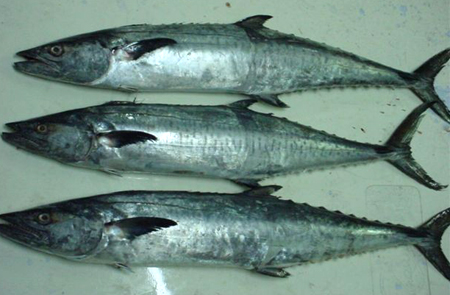
Barbecued king fish with cumin and coriander powder

Ingredients:

1. King fish fillet - 1 (~500 g)
2. Cumin powder - 1 tbsp
3. Coriander powder - 2 tbsp
4. Turmeric powder - 1 tsp
5. Bay leaves - 2
6. Salt - 2 tbsp
7. Cooking oil - 4 tbsp

Procedure:

1. Wash the fish with water and let it drip dry.
2. Add salt, turmeric powder, coriander powder and cumin powder and oil and crush the bay leaves with hand and rub them all in.
3. Leave for 1/2 - 1 hour.
4. Slowly barbecue it.

Barbecued King fish with mustard paste

Ingredients:

1. King fish fillet - 1 (~500 g)
(http://en.wikipedia.org/wiki/Indo-Pacific_king_mackerel, but what we get here in Bangalore does not have spots, looks more like this: http://i01.i.aliimg.com/photo/v0/106908407/King_Fish.jpg)
2. Black mustard seed (whole) - 2 tsp
3. Black jeera (nigella seed) - 1 tsp
3. Black pepper corn - 1 tsp
4. Garlic - 6 cloves
5. Cooking oil - 2 tbsp
6. Salt - 2 tsp

Procedure:

1. Wash the fish with water and dry it by letting the water drip off.
2. Rub salt and oil on it.
3. Soak the mustard, black jeera and pepper corn in a small amount of water (just enough to submerge them - about 3 tbsp) for about 10 minutes.
4. Add the garlic cloves and make a paste out of all these (the mustard will naturally tend to remain coarser, which is fine).
5. Rub the paste on the fish. Leave for 30-60 minutes.
67. Slowly barbecue the fish on a grill or using a skewer.

Thursday, March 22, 2012

Mixed veg with pumpkin, beans and brinjal

This was an impromptu preparation. I decided to cook for myself after a really long time. Went to nearby vegetable shop and picked up whatever looked good. I wanted to cook pumpkin as I had not had it in a long time.

After starting out in the kitchen I realized I had:
A large chunk of pumpkin
Two raw bananas
A few small brinjals
A handful of yardlong beans (বরবটি)
A few onions
Potatoes

No turmeric powder (which is essential in any Bengali cooking) - discovered midway into cooking.
No ginger or garlic.
No whole coriander seeds, only powdered version.

Since I would be the only one to suffer, I went on bravely to make a vegetable dish out of all that I had.
Here is the recipe:

Ingredients (for two servings):

Pumpkin: 200 g
Yard-long beans: 5-6
Brinjal: 1 small
Raw banana: 1/2
Green chili: 3
Onion: 1 medium

Red chili powder: 1/2 tsp
Cumin powder: 2 tbsp
Coriander powder: 2 tbsp
Bayleaves: 2
Cumin seeds: 1 tbsp
Black cumin seeds: 1 tsp
Fenugreek seeds: 1/2 tsp
Fennel seeds: 1 tsp
Mustard seeds: 1/2 tsp
[ All the seeds are essentially components of paanch phoron, but I did not have supply of paanch phoron, in stead I add the seeds directly. This gives some flexibility also: while paanch phoron has all five seeds in equal amount, I reduce the fenugreek seeds as it tastes bitter. ]
Cooking oil: 4 tbsp

Procedure:

Preparing the vegetables:

Chop the pumpkin into small cuboids (1 cm x 1 cm x 0.5 cm - this happens when you slice the pumpkin with 0.5 cm thickness along one face and chop these slices into 1 cm squares in the next stage)
Chop the beans into 2 cm long pieces.
Chop the brinjal it 2 cm cubes
Remove the peel of the banana with a knife and then chop it into cuboids (1 cm x 1 cm x 3 cm)
Chop the onion into long thin ( 2 mm) slices.
Slit the green chilies

Cooking:

1. Heat oil in a round bottomed pan (kadai).
2. Add the whole seeds and the bay leaves.
3. When the seeds cease sputtering, add the green chilies and onion.
4. After some time the onion pieces will become transparent and then get dark (not exactly golden brown due to colour from black cumin). Now add the vegetables.
5. Add  the red chili powder, 1 tbsp each of cumin powder and coriander powder. Stir and mix well and then cook it with cover for 5 minutes (without adding water - water will come out of the vegetables).
6. Open the lid and check that the vegetables look soggy and faded in colour. If they are sticking to the bottom of the pan, add some more oil and scrape them off. Add 2 cups of water and cook with lid on for 15 minutes.
7. Open the lid and check that everything is cooked (pumpkin and raw banana are the tougher ones, so make sure you they are cooked to your taste). Add the rest of the cumin and coriander powder and mix. It should be semi dry with a small amount of gravy at bottom. Boil off any excess water with the lid open.


Thursday, December 22, 2011

Coastal food sampling in Bombay

This post is long overdue. I had been to Bombay this November and my greatest foodie-buddie AP took me on a food tour. We sampled food in Bombay, Thane and Pune, trying make as wide a sampling as possible within a couple of days (I had to increase the number of meals in a day to accommodate all the variety).

Day 1:
Bombay - lunch at Sindhu Durga at Dadar West (land mark Maharashtra Navanirman Sena head quarters).
Sindhu Durga serves primarily Malwani/Konkani food. Our menu consisted of the following:

Mori mashala fry (spicy shark  fry)

Jawala Bhajji (jawala - tiny prawns, Bengali: কুচো চিংড়ি/ঘুষো চিংড়ি, bhajji - fry)
- This was dominated by fresh green chilli and chopped ginger.

Bombil fry - Bombil or Bombay duck is perhaps the favourite of coastal Maharashtra. In Bengali it is called bamaloh or loita (লইট্যা/লোটে)  and more popular among people from East Bengal. Most West Bengali's feel disgusted by its slithery look and thus this is one of the cheapest fish there. But let me assure you, it tastes fantastic when cooked properly. Sindhu Durga did a great job of this.

Rawas fry - Rawas is Indian Salmon, though I am not sure I know it. From images on the web it looks very similar to "ভোলা" in Bengali.

Kokamwati - Kokam is a fruit commonly used as spice in the west coast of India. It is somewhat sour in taste. Kokamwati is a tangy drink prepared from kokam.

Aamati - this is just spicy gravy (ঝোল in Bengali) accompanying rice.

[Malvani food eaten elsewhere]
Mutton Sagoti - Sagoti is a spicy curry with meat or fish. This has thick gravy.

Day 2:
Morning-Afternoon - Thane
Mamaledaraji mishal pav(adjacent to Collector's office, opposite Jila Parishad) - World's best mishal pav is available here (according to AP). Unfortunately, it is closed on Sunday, so I could not try it. In stead we had Mishal pav in a nearby restaurant and had this very special sweet made from the milk of postpartum cow.

Mahesh Lunch Home
Another common friend SD living in Thane took us to this place. Great food again, and here is our menu:

Crab soup - very similar to sweet corn soup, with crab meat in stead of corn

Surmai mashala fry - Surmai/Vanjaram is one of the more expensive fishes in India. This dish was not a dry fry, but had a kokam based thick gravy.

Prawn koliwada - crispy fried prawns

Clam masala - clams fried with lots of chopped onion, ginger and green chilli

Day 2 (evening):

Tea centre (next to Churchgate) - Thanks to AP and RS for taking me here. As the name suggests, this place is dedicated to tea. It in deed has a wide variety of fancy tea. We tried White tea, Earl Grey, Camomile and Herbal tea. This is the first commercial establishment where I found tea served in its full glory.

Roadside kebabs - We at some kebabs at a roadside stall near World Trade Centre in Bombay. This was a discovery of RS who is a regular customer now. The owner claims that his grandfather was a cook at Bade Miyan and that he inherits the recipes. The kebabs were good, if not exceptional. We missed kheeri kebab (kebab prepared from the meet of cow udder, supposed to be very juicy and should melt in the mouth) which, according to RS, is the most fantastic product of this shop.

Gokul's - is an unusual bar in Bombay. While it attracts very posh customers, the ambience is intentionally kept un-posh.

Baghdadi - a very busy restaurant a few steps off Gokul's on the other side of the road. The food is very cheap but not extraordinary.


Monday, October 31, 2011

Maggi noodles with leftovers - the ideal PhD diet

I should not take credit for this one: perhaps every grad student invents this one in by their second year. Wondering why it took me over five years to find out? Because I can actually cook!

Bragging apart, if you have some tasty left-overs from a Sunday lunch (or  parceled something from the restaurant because you are single and their serving sizes are too big for one person) and you are too lazy/drunk to go out for dinner, then this is a good choice.

Ingredients: 

Any noodles you have in stock.
Any leftover food you have.


Procedure:

1. Cook the noodles (I assume you are an expert with whatever you regularly eat) until 1 minute is left for it to get done.
2. Add the leftover food.
3. Cook for 1 more minute so that the noodles are fully done and the leftover stuff becomes warm.
4. Mix with a spoon and eat.